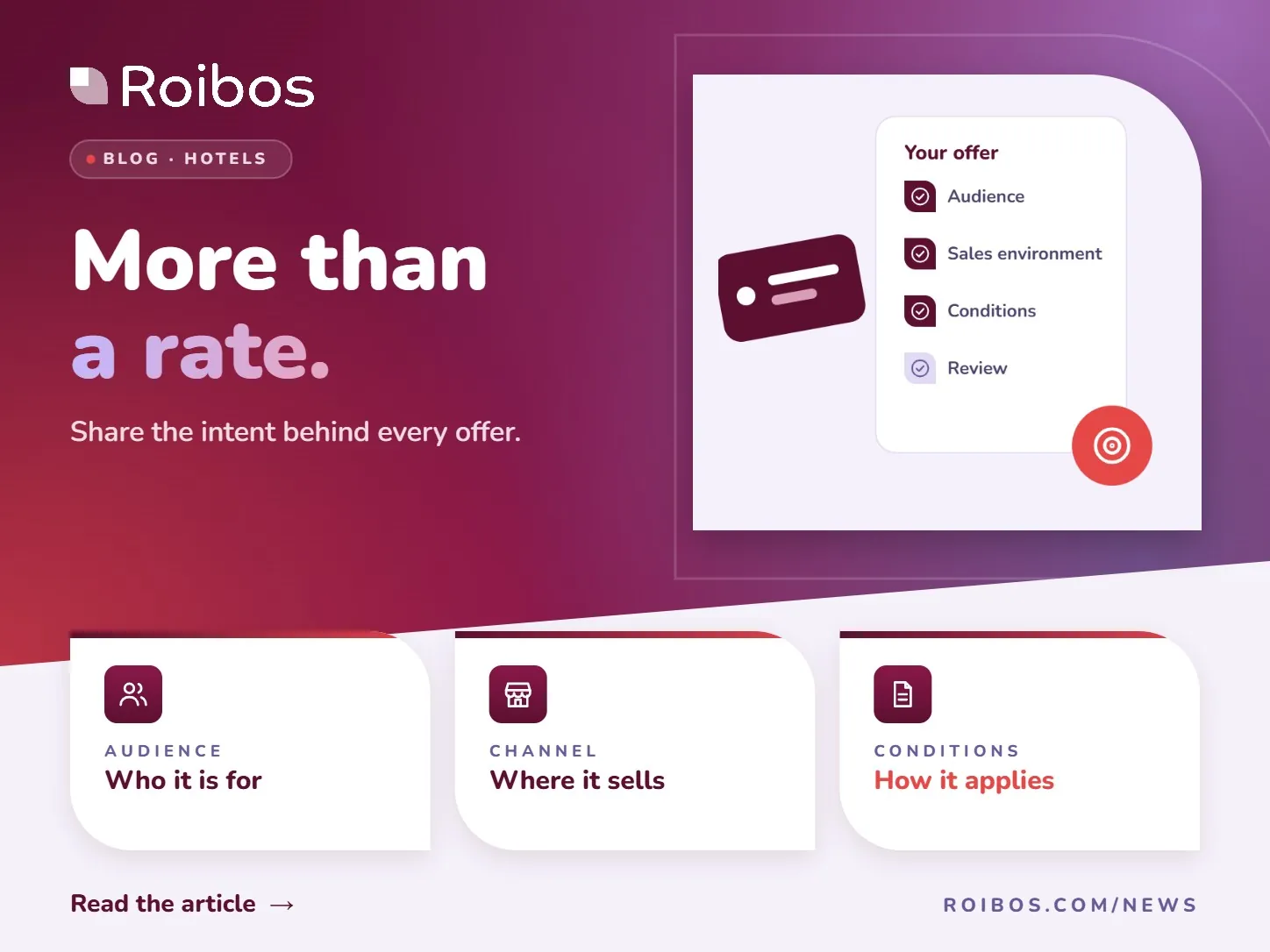
A room-only rate tells a buyer something about the product. It does not necessarily explain the hotel's intended audience, permitted sales environment or reason for making that rate available. When those details remain implicit, two teams can read the same label and reach different conclusions.
For hotels, a clearer offer starts with separating the product description from its commercial purpose. Price matters, but it needs enough surrounding information for partners to understand how the offer should be used.
Describe the outcome you want
Start with a specific commercial objective. You might want longer stays during selected weeks, access to a particular audience or bookings made further in advance. Explain that objective in terms a partner can translate into a proposal.
Consider a hypothetical city hotel seeking weekend leisure demand outside its busiest periods. A discounted room price alone does not explain which weekends matter or which travellers the hotel hopes to attract. Dates, stay patterns and the intended sales environment make the offer easier to evaluate without implying that every booking will meet the objective.
Separate inclusions from permissions
Describe what the guest receives: room category, occupancy, board basis and relevant inclusions. Then describe the agreed permissions governing how the rate may be distributed.
Those are related but different layers. A room-only product does not automatically answer whether public display is permitted. Likewise, describing an offer as a package does not explain every requirement concerning its presentation. Use the agreed definitions for that relationship and ask the partner to confirm its interpretation. Avoid assuming that industry shorthand has an identical meaning in every business.
Make the conditions operational
Translate the intended use into clear instructions. Specify authorised audiences or sales environments, relevant travel and booking dates, redistribution permissions and the process for changing them.
Ask which conditions can be transmitted and enforced by the systems involved. Some instructions may require an operational process or may not be supported at all. Identify those gaps before launch. If an important condition cannot be preserved, revise the proposed route or keep the affected offer inactive until the teams agree an acceptable approach.
Check what reaches the selling environment
Review an example of how the offer appears at the point of sale, using the partner's approved testing process. Check the product and the conditions together, rather than approving the price in isolation.
Record the version that was agreed and assign an owner for updates. A change to availability, eligibility or cancellation conditions should have a clear communication path. Keeping the original commercial email is useful, but it cannot establish what every connected system received or displayed later.
Review the offer against its purpose
After an agreed period, compare the result with the initial objective. For the city hotel, that means looking at the relevant weekends and stay patterns, alongside contribution and servicing requirements where the data is available.
At Roibos, our perspective is that a distribution discussion becomes more useful when rate, route and intention are considered together. Choose one active offer and ask a colleague outside the contracting team to explain its intended use. Any uncertainty is a good starting point for improving the information that accompanies your next rate.