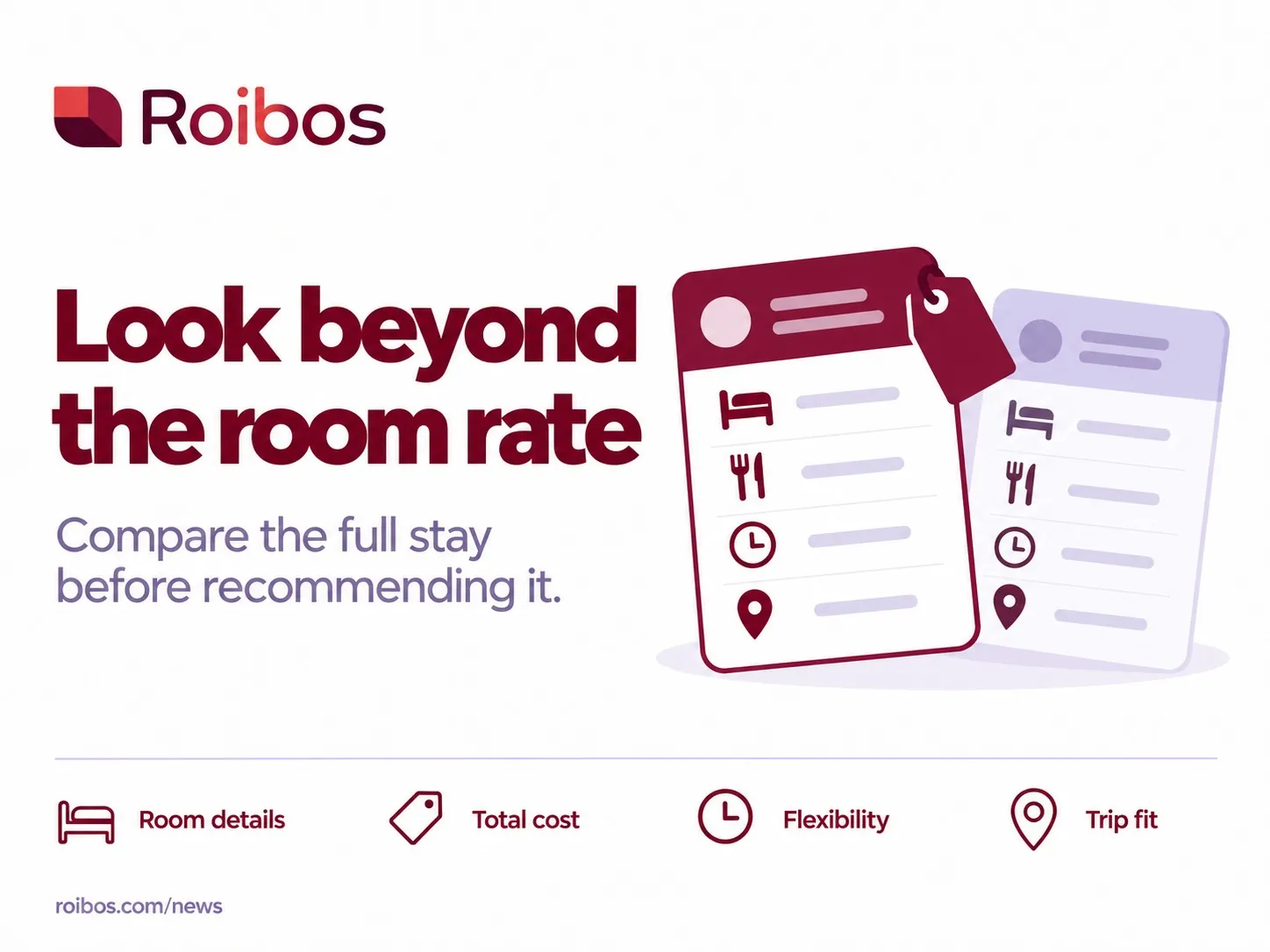
Two hotel offers can show similar nightly prices while delivering very different stays. Breakfast, room occupancy, local charges and cancellation conditions can change which option makes sense for the traveller.
For travel agencies and distribution partners, a reliable comparison begins with a shared set of booking requirements. Establish those requirements before deciding which rate offers better value. This also makes the recommendation easier to explain when a customer asks why the cheapest result was not selected.
Compare the same stay
Use identical dates, guest numbers and child ages where relevant. Check room category, bedding and board basis rather than relying on similar room names.
A double room and a family room are not interchangeable simply because both appear in a search for two adults. The same applies to a room with a guaranteed bed configuration and one where the arrangement is only a request.
Confirm which features matter most to the customer. For a short business trip, location and arrival arrangements may outweigh an additional amenity. For a family, occupancy rules can determine whether the offer is suitable at all.
Build a total cost comparison
Look at the total price for the full stay and identify what is included, excluded or payable locally. Check the currency used for each amount and avoid combining figures without making the conversion basis clear.
Mandatory charges deserve particular attention. Where an amount depends on guest age, season or local rules, verify the applicable information for the actual booking rather than carrying assumptions across properties.
Optional services belong in the comparison only when the traveller is likely to use them. An included breakfast has little practical value to someone leaving before breakfast service begins.
Put a value on flexibility
Check the cancellation deadline and the penalties that follow it. Establish whether the deadline refers to a particular time zone, and confirm any separate no-show or modification conditions.
A lower non-refundable rate may suit a confirmed itinerary. A more flexible option may be worth considering when dates are uncertain. Explain the trade-off using the customer's circumstances rather than treating flexibility as an automatic upgrade.
For example, a modest saving can look less attractive if a likely change would expose the customer to a much larger cancellation charge. Present that exposure clearly without predicting that a change will occur.
Check the practical details
Review check-in arrangements, reception hours and any requirements affecting arrival. For an overnight flight or a late transfer, these details can influence the usefulness of the booking.
Confirm the location against the purpose of the trip. A hotel described as centrally located may still be inconvenient for the venue, transport connection or neighbourhood the customer needs.
When information is unclear, request clarification before presenting the offer as confirmed. Keep a record of material answers so the next colleague handling the booking has the same context.
Make the recommendation easy to understand
Summarise the leading options using the same fields: room, total cost, inclusions and key conditions. State why your preferred option fits this traveller.
Recheck the selected rate and terms before confirmation, since a search result is not a guarantee that the same offer remains available. Save the final booking conditions with the reservation.
The strongest recommendation is the one your team can explain accurately and your customer can choose confidently. A consistent comparison process makes that judgement easier to repeat.
Already a customer?
Access the marketplace and find options for your customers.